Lith Corporation, founded in 1998 by a group of material science doctor from Tsinghua University, has now become the leading manufacturer of battery lab&production equipment. Lith Corporation have production factories in shenzhen and xiamen of China.This allows for the possibility of providing high quality and low-cost precision machines for lab&production equipment,including: roller press, film coater,mixer, high-temperature furnace, glove box,and complete set of equipment for research of rechargeable battery materials. Simple to operate, low cost and commitment to our customers is our priority.
Microwave Sintering Furnace – Professional Mechanical Equipment Introduction
A Microwave Sintering Furnace is an advanced thermalprocessing system designed to densify ceramic, metallic, and composite materials using microwave electromagnetic energy. Unlike conventional resistance or gasfired furnaces that depend on external heat transfer, a microwave sintering furnace applies volumetric heating, where microwaves penetrate the material and generate heat internally. This unique mechanism significantly accelerates the sintering process, improves microstructural uniformity, and reduces overall energy consumption, making it a revolutionary solution in materials science, powder metallurgy, and advanced ceramics manufacturing.
1. Concept of the Microwave Sintering Furnace
Microwave sintering utilizes electromagnetic radiation—typically at 2.45 GHz or 915 MHz—to interact with polar molecules, ions, or conductive particles within a material. These interactions induce molecular oscillation and frictional heating, causing a rapid increase in temperature. Because heating occurs throughout the volume of the material rather than from the outside inward, microwave sintering achieves higher densification, shorter sintering cycles, and improved grain control compared with traditional thermal methods.
2. Structural Design
A microwave sintering furnace consists of several key subsystems engineered for hightemperature, highefficiency thermal processing:
• Microwave Generator System
Magnetron or solidstate microwave sources produce stable microwave power, which can be precisely tuned to match different materials’ absorption properties.
• Waveguide and Coupling Assembly
Ensures efficient transfer of microwave energy to the furnace chamber, maintaining minimal reflection losses and uniform field distribution.
• HighTemperature Sintering Chamber
Constructed from microwavetransparent refractory materials such as alumina, mullite, or zirconia. The chamber is capable of operating between 600°C and 1800°C, depending on furnace model and application.
• Thermal Insulation Layer
Multilayer ceramic fiber insulation reduces heat loss and provides excellent thermal stability, ensuring consistent sintering conditions.
• TemperatureControl System
Equipped with thermocouples, infrared pyrometers, and advanced PID or PLC controllers for precise multistep temperature programs.
• Atmosphere Control Module
Some models support air, inert gas, reducing gas, or vacuum environments, allowing sintering of a wide range of sensitive materials.
• Safety and Cooling System
Includes microwave shielding, interlock doors, overtemperature protection, and air or watercooling for key components.
3. Key Characteristics
• Volumetric and Selective Heating
Microwaves directly heat the internal structure of the material, enabling rapid and uniform temperature rise.
• High Densification Efficiency
Microwave sintering promotes surface diffusion and enhances atomic mobility, producing finer microstructures.
• Rapid Temperature Ramp Rates
Heating rates can exceed 50–200°C/min, drastically shortening sintering cycles.
• Strong Process Controllability
Precise temperature regulation and realtime feedback ensure stable and repeatable sintering outcomes.
• Compatibility with Multiple Materials
Effective for ceramics, metal powders, glassceramics, composites, and functional materials such as ferrites or battery electrodes.
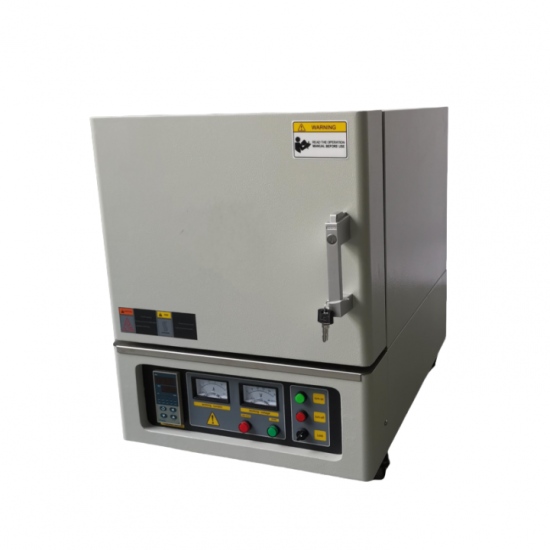
Muffle Furnace
4. Sintering Process Technology
Microwave sintering follows several controlled stages:
• Preheating Stage
Gradual lowpower microwave heating to avoid thermal shock and allow uniform temperature distribution.
• Rapid Heating Stage
Microwave power increases to elevate temperature quickly to the target sintering range.
• Dwell Stage
The furnace maintains a stable high temperature for densification. Microwave energy enhances grain boundary mobility and reduces required dwell times.
• Cooling Stage
Controlled cooling prevents microcracking and ensures stable final microstructure.
Advanced systems support hybrid microwave–resistance heating, enabling the sintering of materials that initially exhibit low microwave absorption.
5. Industrial Applications
Microwave sintering furnaces are widely used in:
• Advanced Ceramics Manufacturing
Including alumina, zirconia, silicon carbide, and bioceramic products.
• Powder Metallurgy and Hard Metals
Sintering of tungsten carbide, tool steels, magnetic materials, and alloy powders.
• Electronic Materials
Ferrites, piezoelectric ceramics, dielectric substrates, and phosphor materials.
• Energy and Battery Materials
Sintering of sodiumion, lithiumion, and solidstate battery electrode materials.
• Research Institutions and Laboratories
For rapid prototyping, material development, and controlled sintering experiments.
6. Advantages
• Significant Reduction in Sintering Time
Processing cycles are reduced by 50–80%, enhancing production efficiency.
• Lower Energy Consumption
Microwaves directly interact with the material, minimizing thermal losses.
• Improved Material Properties
Results in finer grain size, higher density, enhanced mechanical strength, and superior electrical performance.
• Environmentally Friendly Operation
No combustion emissions and reduced carbon footprint.
• High Process Flexibility
Supports various atmospheres, hybrid heating, programmable curves, and multimaterial sintering.
Conclusion
The Microwave Sintering Furnace represents a highperformance, energyefficient, and technologically advanced sintering solution. Its unique volumetric heating mechanism, rapid thermal response, and superior microstructure control make it indispensable in modern materials engineering. Whether applied to ceramics, metals, composites, or functional materials, the microwave sintering furnace delivers exceptional productivity and quality, driving innovation across industrial and scientific fields.
 English ▼
 Subscribe to us
 ONLINE
 +86 13174506016
 Louis@lithmachine.com
 +86 18559646958
 18659217588


