Lith Corporation, founded in 1998 by a group of material science doctor from Tsinghua University, has now become the leading manufacturer of battery lab&production equipment. Lith Corporation have production factories in shenzhen and xiamen of China.This allows for the possibility of providing high quality and low-cost precision machines for lab&production equipment,including: roller press, film coater,mixer, high-temperature furnace, glove box,and complete set of equipment for research of rechargeable battery materials. Simple to operate, low cost and commitment to our customers is our priority.
Microwave Muffle Furnace – Professional Mechanical Equipment Introduction
A Microwave Muffle Furnace is an advanced thermalprocessing device designed to perform rapid heating, ashing, calcination, pyrolysis, melting, and hightemperaturgue material treatment using microwave energy. Unlike a traditional electric muffle furnace that relies solely on resistance heating, a microwave muffle furnace integrates microwave volumetric heating with hightemperature furnace chamber insulation, enabling dramatically faster heating rates, improved temperature uniformity, and reduced energy consumption. It has become a key piece of equipment in laboratories, materials research facilities, and industrial qualitycontrol settings.
1. Concept of the Microwave Muffle Furnace
A microwave muffle furnace works by generating microwave energy—typically at 2.45 GHz—and directing it into a specially designed muffle chamber. When microwaves penetrate the chamber, they interact with dielectric or conductive components of the sample, causing rapid oscillation and frictional heating at the molecular level. This internal heating mechanism allows the furnace to reach high temperatures quickly, often in a fraction of the time required by conventional furnaces.
Incorporating a muffle structure ensures that the chamber maintains stable thermal conditions and isolates the microwave field from the external environment, thereby improving safety, temperature accuracy, and operational reliability.
2. Structural Design
A microwave muffle furnace is composed of several major mechanical and electrical subsystems:
• Microwave Generator
Magnetron or solidstate microwave sources deliver stable energy with adjustable power levels to match specific heating processes.
• Waveguide and Coupling System
Engineered components that transfer microwaves into the muffle chamber with minimal reflection or loss, ensuring efficient energy delivery.
• HighTemperature Muffle Chamber
The core structure made of microwavetransparent refractory materials such as quartz, alumina, or mullite. The muffle ensures uniform heat distribution and protects the electronic components from high temperatures.
• Thermal Insulation and Heating Elements
Although the furnace primarily uses microwave heating, many models incorporate auxiliary resistance heaters to stabilize temperatures and support materials with low microwave absorption.
• Temperature Monitoring and Control
Thermocouples, infrared sensors, and pyrometers provide accurate temperature feedback to a PLC or microprocessor controller, enabling precise temperature profiles.
• Ventilation and Exhaust System
Ensures removal of fumes, gases, or combustion byproducts generated during ashing or pyrolysis.
• Safety System
Includes microwave shielding, leakage detectors, interlocks, and overtemperature protection mechanisms.
3. Key Characteristics
• Volumetric Heating
Microwaves heat the entire sample simultaneously, enabling dramatically shorter processing cycles.
• HighTemperature Capability
The furnace can reach 600°C to 1200°C, depending on configuration and heating elements.
• Fast Ramp Rates
Microwave heating allows temperature increases of hundreds of degrees per minute for rapid thermal processes.
• Hybrid Heating Flexibility
Auxiliary heaters ensure compatibility with both microwavesusceptible and nonsusceptible materials.
• Excellent Temperature Uniformity
The muffle structure distributes thermal energy evenly, minimizing hotspots.
• Clean, Controlled Environment
The closed chamber prevents contamination and ensures stable atmospheric conditions.
4. Process Technology
The microwave muffle furnace supports a wide range of thermal processes:
• Ashing
Used for determining inorganic content in food, biomass, polymers, pharmaceuticals, and petrochemical materials. Microwave heating accelerates decomposition and combustion.
• Calcination
Ideal for decomposing carbonates, hydroxides, and metal salts at high temperature.
• Thermal Decomposition & Pyrolysis
Suitable for organic materials, polymers, and composite samples requiring uniform heating.
• Fusion and Melting
Used in materials preparation and characterization, especially for glass, flux, and mineral samples.
• Sintering & Heat Treatment
Can process ceramics, catalysts, and powder materials under controlled conditions.
Typical processes benefit from programmable temperature ramps, holding stages, and atmosphere control.
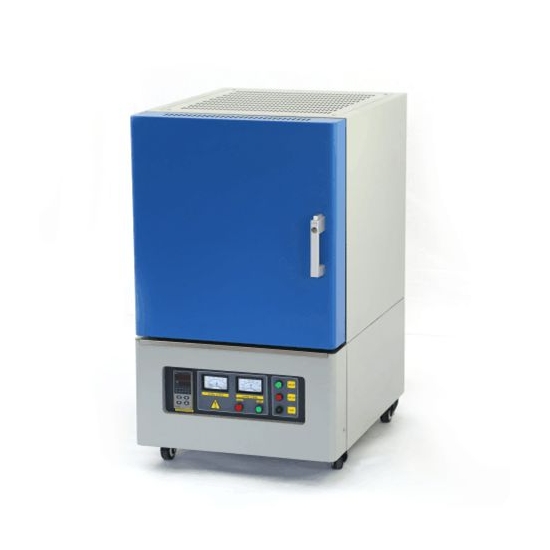
High Temperature Muffle Furnace
5. Applications
Microwave muffle furnaces are used across numerous industries:
• Laboratory Analysis
For rapid ashing, volatile content determination, and sample pretreatment.
• Materials Science
Processing ceramics, catalysts, nanomaterials, and metal oxides.
• Environmental Testing
Ashing soil, sludge, biomass, solid waste, and pollutants.
• Chemical & Petrochemical Industry
Calcining catalysts, preparing chemical intermediates, and analyzing petroleum products.
• Food & Agriculture
Determining ash content and performing moisture analyses on feed, grains, and processed foods.
• Mining & Metallurgy
Fusion, mineral decomposition, and ore analysis.
6. Advantages
• Significantly Reduced Processing Time
Microwave heating cuts ashing or calcination time by 50–90%, increasing efficiency.
• Superior Energy Efficiency
Microwaves transfer energy directly to the sample, minimizing thermal losses.
• Enhanced Analytical Accuracy
Uniform heating improves reproducibility and data reliability.
• Lower Operating Costs
Reduced power consumption and shorter cycles lower longterm expenses.
• Improved Safety
The muffle chamber ensures controlled hightemperature operation with minimal microwave leakage.
• Flexibility and Automation
Programmable controllers, recipe storage, and realtime monitoring support standardized operation.
Conclusion
The Microwave Muffle Furnace represents a major advancement in hightemperature laboratory and industrial thermal processing. By integrating microwave volumetric heating with a robust muffle structure, it delivers rapid heating, precise temperature control, and superior energy efficiency. Its broad applicability—from analytical ashing to complex material preparation—makes it indispensable in modern laboratories, research institutions, and industrial production environments. With clear advantages in performance, safety, and productivity, the microwave muffle furnace continues to redefine the standards of hightemperature processing technology.
 English ▼
 Subscribe to us
 ONLINE
 +86 13174506016
 Louis@lithmachine.com
 +86 18559646958
 18659217588


