Lith Corporation, founded in 1998 by a group of material science doctor from Tsinghua University, has now become the leading manufacturer of battery lab&production equipment. Lith Corporation have production factories in shenzhen and xiamen of China.This allows for the possibility of providing high quality and low-cost precision machines for lab&production equipment,including: roller press, film coater,mixer, high-temperature furnace, glove box,and complete set of equipment for research of rechargeable battery materials. Simple to operate, low cost and commitment to our customers is our priority.
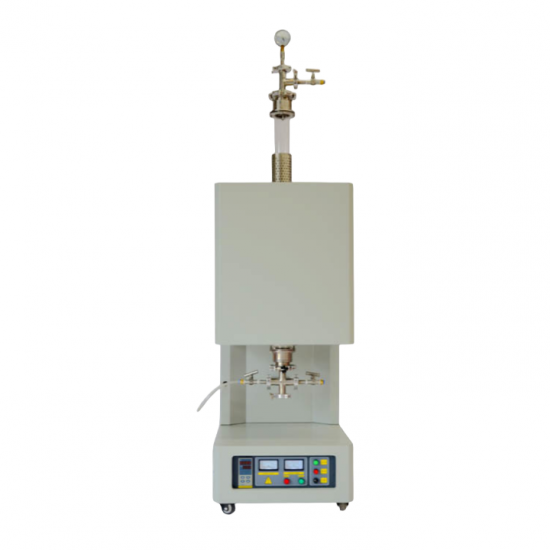
Microwave Cracking Furnace
A Microwave Cracking Furnace is an advanced thermal processing system designed to decompose, reform, or convert complex materials through high-frequency microwave energy. As industries move toward cleaner, faster, and more energy-efficient production technologies, microwave cracking has emerged as a cutting-edge method for breaking chemical bonds, reducing material size at a molecular level, and facilitating high-value recovery of substances that are otherwise difficult to process using traditional heating methods. This equipment is widely used in chemical processing, waste recycling, catalyst regeneration, battery materials treatment, and petrochemical research.
Overview
Unlike conventional furnaces that rely on conduction, convection, or radiation, a microwave cracking furnace uses electromagnetic waves to heat materials internally and uniformly. This volumetric heating mechanism delivers extremely rapid energy penetration, enabling efficient cracking reactions under controlled atmospheres and precise thermal gradients. The system is typically equipped with a high-power microwave generator, a refractory cavity chamber, a reaction tube or crucible, vacuum or gas-flow control, temperature monitoring sensors, and a robust safety interlock structure.
Key Features
1. High-Efficiency Microwave Heating
The furnace operates at industrial-grade microwave frequencies, usually 2.45 GHz, allowing deep penetration of energy into the material. This ensures uniform heating, reduces thermal losses, and dramatically shortens reaction cycles.
2. Precise Temperature Control
Integrated infrared or fiber-optic sensors provide real-time monitoring, allowing accurate regulation of temperature profiles up to 1200°C or higher, depending on the configuration.
3. Programmable Reaction Environment
The furnace supports a variety of operational atmospheres such as inert gases, reducing gases, or controlled vacuum conditions. This flexibility enables users to tailor cracking reactions for different materials, including organic compounds, polymers, and carbonaceous materials.
4. Advanced Microwave Shielding
The system incorporates multi-layer electromagnetic shielding and automatic shutoff mechanisms to eliminate radiation leakage and ensure safe industrial or laboratory operation.
5. Modular and Scalable Design
Microwave cracking furnaces are available in benchtop laboratory models and large-scale industrial units, enabling scalability from research to mass production.
Working Process
The microwave cracking furnace functions by converting electrical energy into microwave energy via a magnetron or solid-state microwave generator. The microwaves enter the resonant cavity and are absorbed by materials with high dielectric loss. As the molecules oscillate under the microwave field, internal friction produces heat, initiating cracking reactions.
Depending on the application, the furnace may be operated under:
* Fixed or programmed temperature ramps
* Continuous gas flow or controlled vacuum
* Batch or semi-continuous feeding systems
The cracked products may include gases, liquids, and solid residues, which can be further processed or collected for reuse. This method is particularly efficient for materials with strong molecular bonds that are difficult to decompose using traditional furnaces.
Electric Tube Furnace
Applications
1. Polymer and Plastic Cracking
Microwave cracking can convert waste plastics into high-value fuels, monomers, or syngas with improved yield and lower energy consumption.
2. Battery Material Recovery
It is effective for breaking down electrode materials, organic binders, and electrolyte residues, enabling purification and recycling.
3. Catalyst Regeneration
The furnace can remove carbon deposits and other contaminants from catalyst surfaces, restoring activity without damaging microstructures.
4. Petrochemical Material Processing
Microwave cracking assists in research involving hydrocarbon decomposition, aromatic compound reforming, and related chemical pathways.
5. Waste Treatment and Resource Utilization
It enables efficient decomposition of hazardous waste, electronic waste, and environmentally harmful materials.
Advantages
* Rapid Heating and Processing Speed
Microwave cracking significantly reduces reaction time compared to conventional thermal methods.
* Higher Energy Efficiency
Direct internal heating minimizes thermal losses and reduces overall energy consumption.
* Enhanced Product Quality
Uniform heating improves reaction consistency, reduces impurities, and enhances material recovery.
* Environmentally Friendly
The technology reduces greenhouse gas emissions and supports green recycling and waste-to-resource applications.
* Lower Operating Cost
Reduced reaction time, improved yields, and electricity-based operation contribute to cost savings over the equipment’s lifetime.
 English ▼
 Subscribe to us
 ONLINE
 +86 13174506016
 Louis@lithmachine.com
 +86 18559646958
 18659217588


