Lith Corporation, founded in 1998 by a group of material science doctor from Tsinghua University, has now become the leading manufacturer of battery lab&production equipment. Lith Corporation have production factories in shenzhen and xiamen of China.This allows for the possibility of providing high quality and low-cost precision machines for lab&production equipment,including: roller press, film coater,mixer, high-temperature furnace, glove box,and complete set of equipment for research of rechargeable battery materials. Simple to operate, low cost and commitment to our customers is our priority.
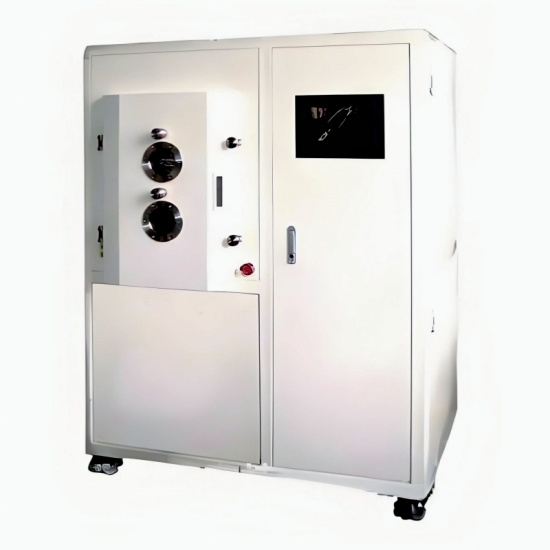
Benchtop PVD System: Compact and Precision Equipment for Thin Film Deposition
Overview
A Benchtop PVD System is a compact physical vapor deposition (PVD) platform designed to deposit thin films onto a wide range of substrates in a controlled vacuum environment. Utilizing methods such as thermal evaporation or magnetron sputtering, this system allows material from a source to vaporize and condense onto the substrate, forming uniform, adherent coatings with precisely controlled thickness. Benchtop PVD systems are ideal for laboratories, research institutions, and small-scale prototype production, offering the performance of larger industrial PVD systems in a smaller, more accessible footprint.
These systems are widely used in materials science, electronics, optics, and nanotechnology research. The ability to control deposition parameters precisely, combined with a high-quality vacuum environment, ensures that thin films exhibit high purity, uniformity, and reproducibility. Researchers and engineers can efficiently explore new materials, create experimental devices, and develop prototypes without the cost or complexity of full-scale industrial equipment.
Features
Benchtop PVD systems integrate several advanced features designed to enhance performance, safety, and user experience:
1. High-Vacuum Chamber
The compact stainless-steel vacuum chamber achieves pressures typically ranging from 10⁻⁵ to 10⁻⁷ torr, ensuring minimal contamination and optimal film quality.
2. Versatile Deposition Sources
Depending on the system, deposition sources may include resistive thermal evaporation, electron-beam evaporation, or small-scale magnetron sputtering. These sources allow deposition of metals, alloys, oxides, and some organic compounds.
3. Rotating or Tilting Substrate Holder
Substrate holders often feature rotation or tilting mechanisms to guarantee uniform film thickness across the entire surface.
4. Thickness and Rate Monitoring
Integrated quartz crystal microbalance (QCM) sensors provide real-time monitoring of deposition rate and film thickness, enabling precise process control.
5. Digital Control Interface
Benchtop systems are equipped with programmable digital controllers that allow the user to set deposition parameters such as power, temperature, deposition rate, and process duration for reproducible results.
6. Safety and Maintenance Features
Systems include vacuum interlocks, temperature protection mechanisms, and modular components for safe operation and easy maintenance.
Process
The PVD coating process on a benchtop system involves several steps designed to maximize film quality:
1. Substrate Preparation: Substrates are cleaned to remove grease, dust, or oxidation that could interfere with adhesion.
2. Chamber Loading and Evacuation: Substrates and source materials are placed inside the vacuum chamber. Pumps evacuate the chamber to achieve high vacuum conditions.
3. Material Vaporization: The source material is heated using resistive, electron-beam, or sputtering techniques. Vaporized atoms travel through the vacuum and condense onto the substrate surface, forming a thin film.
4. Deposition Monitoring: QCM sensors continuously monitor deposition rate and thickness, allowing the operator to maintain precise control over the coating process.
5. Process Completion: Once the desired thickness is achieved, the source is turned off, the chamber is cooled, and vacuum is released for substrate removal.
Oxide Deposition
Applications
Benchtop PVD systems have broad applications across research and development:
* Electronics and Semiconductors: Deposition of conductive and protective layers, electrodes, and thin films for integrated circuits and sensors.
* Optics: Fabrication of mirrors, anti-reflective coatings, optical filters, and multilayer structures.
* Materials Research: Creation of nanoscale thin films for studies on electrical, magnetic, or optical properties.
* Sample Preparation: Coating non-conductive substrates with conductive films for scanning electron microscopy (SEM) analysis.
* Prototyping and Education: Development of experimental devices, educational demonstrations, and laboratory-scale thin film fabrication.
Advantages
Benchtop PVD systems offer several advantages that make them particularly suitable for laboratory and small-scale applications:
1. Compact and Space-Saving: Can be installed on standard laboratory benches, reducing space requirements compared to industrial systems.
2. High Film Purity: Vacuum operation minimizes contamination, ensuring high-quality coatings.
3. Precise Thickness and Rate Control: Real-time monitoring ensures reproducible, uniform films.
4. Versatility: Supports multiple deposition materials, including metals, alloys, and some oxides.
5. Ease of Operation: User-friendly digital interfaces and automated functions simplify operation.
6. Cost-Effective: Offers high-quality thin film capabilities at lower cost and smaller scale than full-sized industrial PVD systems.
Conclusion
The Benchtop PVD System is a powerful tool for laboratories, research centers, and small-scale production facilities requiring precise, high-quality thin film deposition. Its combination of compact design, precise control, and versatility allows researchers to fabricate uniform, high-purity coatings for applications in electronics, optics, materials science, and nanotechnology.
By offering reliable, repeatable, and efficient thin film deposition in a small footprint, benchtop PVD systems bridge the gap between experimental research and industrial-scale production, providing an accessible and flexible solution for advancing thin film technology and materials innovation.
 English ▼
 Subscribe to us
 ONLINE
 +86 13174506016
 Louis@lithmachine.com
 +86 18559646958
 18659217588


